Due to time constraints and not having enough information to work on, I've decided to refocus my efforts for my Contextual studies purely on the Halo franchise. For my project contextual study I shall look at the Halo franchise and how it's changed the Coherent world through it's trans media.
The Halo franchise explains nothing in it's main story line, if you were to go through the entire games, you'd hear terms and phrases that tell you what things are, but never explaining them, that's where it's trans-media comes in. The trans media for Halo built up the world around the game franchise had already laid down and for my presentation, I shall look at that, and how it's media handles it, as well as how the games and other writers handle it.
Thursday, 22 November 2012

Mass Effect Resaerch
Mass Effect:- Surprisingly each game feels very much different Star Trek series.
Mass effect is a Third Person Shooter, Role Playing Game that was released by Bioware in 2007. The game was awarded for it in depth RPG elements an how decisions and choices affected the out come of the game, making game feel more organic and less forced. It also introduced interesting ways of expanding the players knowledge of the universe via conversations with other characters and in the game codex. Sadly the first game was slightly weak in terms of the combat department.
But as time went on the games combat system improved, many holding Mass Effect 2 to be the strongest of the three games, while each game held to great critical acclaim, the third game is held up fan disagreement and back lash, feeling that the games ending ruins the entire franchise and what players have worked towards. We will be looking at this games Trans Media to see if they hold up strong like the first two or fall like the third.
 Novels:-
Overall the the first three Mass Effect books were written by Drew Karpyshyn, he also wrote for the first two Mass Effect games. Sadly I was not able to find any reviews on his last two books, but it states that his first book, went deeply into not just expanding the universe, but also the politics of council races.
The fourth book was written by the infamous William C. Dietz, this time the major cause for concern was wide spread backlash from fans and readers of the book, about the books numerous faults. Fans were so disgusted by the book that there were actual videos posted online of fans burning their copies of the book in protest. Bioware actually recalled the copies of the back and had many of the faults corrected, this however did not fix the books bad story,
Comics:-
The writers for nearly all the Mass Effect comic books is Mac Walters who like Drew Karpysyn, wrote most of the Mass effect games, most notably, the last two. While the stories for these book receive high praise, the artwork can be at fault at times, to the point it is mocked by fans, by delivering odd, if not immersion breaking expressions.
 Anime:-
On April 2011 it was announced that an animated version of Mass Effect was going to be released, called Paragon Lost. The film will follow a stylized anime style and be set during the events of the second game. And is set to be released on December of the follow year of it's announcement.
Mass effect is a Third Person Shooter, Role Playing Game that was released by Bioware in 2007. The game was awarded for it in depth RPG elements an how decisions and choices affected the out come of the game, making game feel more organic and less forced. It also introduced interesting ways of expanding the players knowledge of the universe via conversations with other characters and in the game codex. Sadly the first game was slightly weak in terms of the combat department.
But as time went on the games combat system improved, many holding Mass Effect 2 to be the strongest of the three games, while each game held to great critical acclaim, the third game is held up fan disagreement and back lash, feeling that the games ending ruins the entire franchise and what players have worked towards. We will be looking at this games Trans Media to see if they hold up strong like the first two or fall like the third.

Overall the the first three Mass Effect books were written by Drew Karpyshyn, he also wrote for the first two Mass Effect games. Sadly I was not able to find any reviews on his last two books, but it states that his first book, went deeply into not just expanding the universe, but also the politics of council races.
The fourth book was written by the infamous William C. Dietz, this time the major cause for concern was wide spread backlash from fans and readers of the book, about the books numerous faults. Fans were so disgusted by the book that there were actual videos posted online of fans burning their copies of the book in protest. Bioware actually recalled the copies of the back and had many of the faults corrected, this however did not fix the books bad story,
Comics:-
The writers for nearly all the Mass Effect comic books is Mac Walters who like Drew Karpysyn, wrote most of the Mass effect games, most notably, the last two. While the stories for these book receive high praise, the artwork can be at fault at times, to the point it is mocked by fans, by delivering odd, if not immersion breaking expressions.
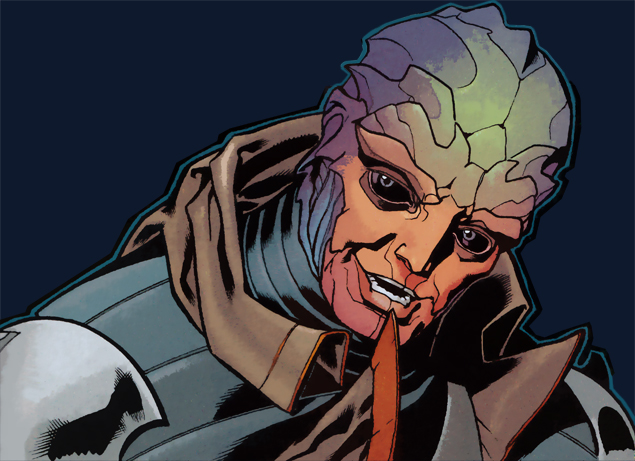
On April 2011 it was announced that an animated version of Mass Effect was going to be released, called Paragon Lost. The film will follow a stylized anime style and be set during the events of the second game. And is set to be released on December of the follow year of it's announcement.
Monday, 19 November 2012
For my contexual studies I shall...
I shall be looking into how approaching Transmedia from both an artistic standpoint and a financial one can alter it, as history has shown me from my personal experience that looking at something purely financially can destroy what made it great in the first place, but then again creating content with financial aid can destroy it before it's even begun.
For the study I have chosen to look at two game franchise whose game sales and stories are both held in high regards to their fans, but each have diffrent results concerning their transmedia.
These two game franchises are Halo and Mass Effect.
Halo:- The Six Billion Dollar Doughnut.
Halo is a Sci-fi First person shooting game made by Bungie and Published by Microsoft for the release of Autumn 2001 with Halo: Combat Evolved. The game had gone through many changes over it's design period, originally starting off as an Real time Strategy game for Mac, but was later released on the original Xbox console as an FPS to show case the Xbox's graphical and processing power.
 The game released in later 2001 and was praised by both critic and gamers alike, making it the number one reason to buy and Xbox at the time.
"A third of the world's 15 million Xbox owners have a copy of Halo, an extraordinarily high penetration for a shooting game among a library of more than 400 titles." Xbox wears a Halo of Success by Jason Hill. Nov. 4 2004
Due to it's popularity in not just gameplay, but also story Halo birthed a multitude of Transmedia including, books, comics, spin-off Games. Alternative Reality Games and live action shorts.
Books:-
Halo has been adapted into many different forms of transmedia, the most commonly talked about our it's novels, most of which are written by Eric Nylund. Who also wrote the first Halo book Halo:The Fall of Reach a prequel to the first game which would also later be adapted into it's own game.
The Fall of Reach claimed a positive response from readers, mostly on how much depth it added in to the Halo universe, at first the book hardly sold any copies, but by December of 2009 the book had sold over a million copies.
The next book was written by the 'infamous' William C.Dietz and unlike the previous book which added content to the world, Dietz was apparently only asked to novelize the game. Either way the book received mixed feelings from readers, some not liking the portrayal of the characters, finding it very confusing after just reading Nylund's take on him.
Bungie and Microsoft went back to having Nylund writing the next book, making Halo:The Flood the only book that Dietz wrote for the game.
Unlike the previous novel Nylund wrote Halo First strike sold very well during it's launch, so much that it made the New york time's best sellers list along with his next book Ghost of Onyx that wrapped up many plot ties with in the series. The following book was again written by a new Author a Joseph Staten who wrote Halo: Contact Harvest, which unlike the last time the book switched authors actually received a positive reception making the New York best seller.

So far it seems Halo has a really good relationship when creating literary media. Bungie intended to please fans by sticking with a writer who got the best results and seemed to understand the universe they creating. Instead of just hiring out a new author every time. Bungie have stated that they considered each novel Canon to their universe, so everything that happens in the books happens in the games universe and they do not stand on their own legs.
But it seems, that the next three Halo books will NOT be written by either Nyuland or Staten, instead it will be written by Greg Bear. It seems to be divided among Hardcore Halo fans and casual readers. A review by a Dr.Nigel Seel who claims the book is "Tired, Unoriginal and Boring."While the Portlandbookreview gave positive feedback to the book, claiming that it was a good addition to the series and fans would love it.
But the book is still fairly new and only time will tell how the rest of the Halo fan base react to it, but it is interesting to note that Bungie have 'not' stated as to why they did not get Nyuland or Staten to write this series, perhaps it is due to the games change of hands, with 343 Studios taking over the reigns of Halo.
Comics:-
With Video games being a visual medium, it is not uncommon to see the Halo franchise move towards comics books or as the first would like to be called Graphic novels, The Halo: Graphic novel was a collection of four short stories. Like it's purely written counterparts, The graphic novel was praised for fleshing out the Halo Universe and war praised for the quality of the artwork and how they worked with the stories, it is rumored to have 100,000 copies printed. The Book itself was published by none other than Marvel comics, which is curious as most properties outside of super hero comics for around this time are usually self published OR published by Dark Horse comics.
 That said Marvel was in development for a graphic novel mini series that tied the second and third game together. While the miniseries was a commercial success, outselling on it's launch and the hardcover edition was the best selling Graphic novel of the week.
Sadly the mini series hit mixed reviews from readers, while it did still have a great story, action and plot. They felt that it just couldn't recreate some of the games grander moments and that the lack of Master chief, the game's protagonist seemed a bit off considering that this was meant to tie his games together. But it is still worth noting that these were minor hiccups in a overall well written book.

By the looks it seems that Marvel comics were tasked with doing all the Halo comics as they announced in 2009 that they'd two more comics as five part series written, one written by Peter David and the other written by Fred Van Lente. The first to be released was Halo: Hell Jumper by Peter David, while Fred Van Lente released Halo:Blood Line in December 2009. Both stories received high praise with very little to no displeasure about the story, most reviews by consumers praise the two comics for their additions and insight into the world.
A comic book adaptation was made of Eric Nylund's Fall of reach, like his novel the comic book received a lot of praise, but did not reach the same commercial success.
Film:-
A film adaptation as been in works since 2005 and has yet to see the light of many big name studios and directs have said to be working on the project, but no official trailer or production shots have been seen to this very day.
But Halo has known for doing live action trailers for their came as well as a live action mini series for their recent game, Halo 4. The mini series has been shown on the youtube channel Machnima and is called Forward onto Dawn.
Anime:-
In Feb 2010 343 studios financed and released Halo Legends a collection of short Anime themed stories, the dvd was felt with mixed feelings, more which gravitated towards the look and feel of the series rather their over all worth, some feeling that the anime style didn't suit a series like Halo, while others feeling that it was refreshing and seeing these interpretations was interesting.
Spin Offs:-
The general reception of the game was positive feeling that the changes made the game feel alot more fresh and challenging, making players think and reconsider the player style they were using despite having similar controls.
Like ODST, you play a down graded to what the player is normally use to, in this game you play as a Spartan III and while you are still much better compared to that of a normal human, you are still no up there like Master Chief from the main franchise.
The game receive critical acclaim, Edge, GamePro and many others consider this to be the best Halo game title to date. (to date of the review). Sadly again there is no real insight as to what it adds to the game, beside adding extra history.
For the study I have chosen to look at two game franchise whose game sales and stories are both held in high regards to their fans, but each have diffrent results concerning their transmedia.
These two game franchises are Halo and Mass Effect.
Halo:- The Six Billion Dollar Doughnut.
Halo is a Sci-fi First person shooting game made by Bungie and Published by Microsoft for the release of Autumn 2001 with Halo: Combat Evolved. The game had gone through many changes over it's design period, originally starting off as an Real time Strategy game for Mac, but was later released on the original Xbox console as an FPS to show case the Xbox's graphical and processing power.
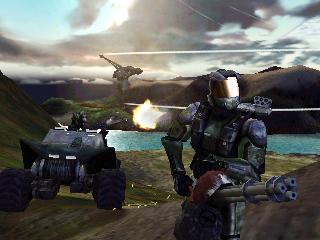
"A third of the world's 15 million Xbox owners have a copy of Halo, an extraordinarily high penetration for a shooting game among a library of more than 400 titles." Xbox wears a Halo of Success by Jason Hill. Nov. 4 2004
Due to it's popularity in not just gameplay, but also story Halo birthed a multitude of Transmedia including, books, comics, spin-off Games. Alternative Reality Games and live action shorts.
Books:-
Halo has been adapted into many different forms of transmedia, the most commonly talked about our it's novels, most of which are written by Eric Nylund. Who also wrote the first Halo book Halo:The Fall of Reach a prequel to the first game which would also later be adapted into it's own game.
The Fall of Reach claimed a positive response from readers, mostly on how much depth it added in to the Halo universe, at first the book hardly sold any copies, but by December of 2009 the book had sold over a million copies.
The next book was written by the 'infamous' William C.Dietz and unlike the previous book which added content to the world, Dietz was apparently only asked to novelize the game. Either way the book received mixed feelings from readers, some not liking the portrayal of the characters, finding it very confusing after just reading Nylund's take on him.
Bungie and Microsoft went back to having Nylund writing the next book, making Halo:The Flood the only book that Dietz wrote for the game.
Unlike the previous novel Nylund wrote Halo First strike sold very well during it's launch, so much that it made the New york time's best sellers list along with his next book Ghost of Onyx that wrapped up many plot ties with in the series. The following book was again written by a new Author a Joseph Staten who wrote Halo: Contact Harvest, which unlike the last time the book switched authors actually received a positive reception making the New York best seller.

So far it seems Halo has a really good relationship when creating literary media. Bungie intended to please fans by sticking with a writer who got the best results and seemed to understand the universe they creating. Instead of just hiring out a new author every time. Bungie have stated that they considered each novel Canon to their universe, so everything that happens in the books happens in the games universe and they do not stand on their own legs.
But it seems, that the next three Halo books will NOT be written by either Nyuland or Staten, instead it will be written by Greg Bear. It seems to be divided among Hardcore Halo fans and casual readers. A review by a Dr.Nigel Seel who claims the book is "Tired, Unoriginal and Boring."While the Portlandbookreview gave positive feedback to the book, claiming that it was a good addition to the series and fans would love it.
But the book is still fairly new and only time will tell how the rest of the Halo fan base react to it, but it is interesting to note that Bungie have 'not' stated as to why they did not get Nyuland or Staten to write this series, perhaps it is due to the games change of hands, with 343 Studios taking over the reigns of Halo.
Comics:-
With Video games being a visual medium, it is not uncommon to see the Halo franchise move towards comics books or as the first would like to be called Graphic novels, The Halo: Graphic novel was a collection of four short stories. Like it's purely written counterparts, The graphic novel was praised for fleshing out the Halo Universe and war praised for the quality of the artwork and how they worked with the stories, it is rumored to have 100,000 copies printed. The Book itself was published by none other than Marvel comics, which is curious as most properties outside of super hero comics for around this time are usually self published OR published by Dark Horse comics.

Sadly the mini series hit mixed reviews from readers, while it did still have a great story, action and plot. They felt that it just couldn't recreate some of the games grander moments and that the lack of Master chief, the game's protagonist seemed a bit off considering that this was meant to tie his games together. But it is still worth noting that these were minor hiccups in a overall well written book.
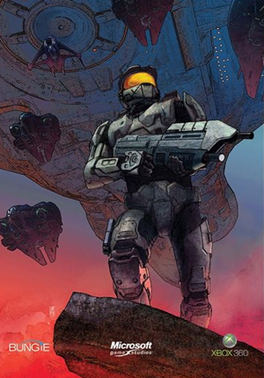
By the looks it seems that Marvel comics were tasked with doing all the Halo comics as they announced in 2009 that they'd two more comics as five part series written, one written by Peter David and the other written by Fred Van Lente. The first to be released was Halo: Hell Jumper by Peter David, while Fred Van Lente released Halo:Blood Line in December 2009. Both stories received high praise with very little to no displeasure about the story, most reviews by consumers praise the two comics for their additions and insight into the world.
A comic book adaptation was made of Eric Nylund's Fall of reach, like his novel the comic book received a lot of praise, but did not reach the same commercial success.
Film:-
A film adaptation as been in works since 2005 and has yet to see the light of many big name studios and directs have said to be working on the project, but no official trailer or production shots have been seen to this very day.
But Halo has known for doing live action trailers for their came as well as a live action mini series for their recent game, Halo 4. The mini series has been shown on the youtube channel Machnima and is called Forward onto Dawn.
Anime:-
In Feb 2010 343 studios financed and released Halo Legends a collection of short Anime themed stories, the dvd was felt with mixed feelings, more which gravitated towards the look and feel of the series rather their over all worth, some feeling that the anime style didn't suit a series like Halo, while others feeling that it was refreshing and seeing these interpretations was interesting.
Spin Offs:-
- Halo Wars :-
- Halo 3:ODST
The general reception of the game was positive feeling that the changes made the game feel alot more fresh and challenging, making players think and reconsider the player style they were using despite having similar controls.
- Halo Reach
Like ODST, you play a down graded to what the player is normally use to, in this game you play as a Spartan III and while you are still much better compared to that of a normal human, you are still no up there like Master Chief from the main franchise.
The game receive critical acclaim, Edge, GamePro and many others consider this to be the best Halo game title to date. (to date of the review). Sadly again there is no real insight as to what it adds to the game, beside adding extra history.
Thursday, 15 November 2012
Presentation on 24/9/2012 : Propp's spheres of Action
We were tasked to create a presentation in our groups, the task was to take two games 'worlds' and try and identify 'spheres of action' that were linked to the work of Vladimir Propp, Propp studied fairy stories and noticed that they all had similar themes to them, to which he called Spheres or action, each action he gave a name such as.
After we we're sure, our group went about thinking how to decided what the best two game worlds would be to search for Spheres of action in, we decided to stick primarily to worlds that we were more or less all too familiar with, so we didn't go looking at skull girls like as Sam had never played the game and made last task a bit difficult.
We decided to focus primarily on FF7 and Crash Bandicoot, thinking their different play styles and overall genre would make for an interesting talk.
---Final Fantasy 7----------------------------------------------------------------
The Hero-
 Zak's sword is more than just a weapon in the game, it becomes a symbol to the character and helps guides them to their end goal, later it becomes historical land point in the games film Sequel.
The Villain-
 The North Crater is a very important location in the game series, it is both the start and end of all problems and things that lead up to this moment.
The North Crater is where Jenova crashed to earth and where you ultimately face her 'son' Sephiroth.
The Donor-
 The Lifestream is many things with in the game as it is mostly everything in creation, in this sense it is the crystallized version of it that help increase the players power, this is called Materia.
The Princess, and her father-
 The Earth, in the game there are many things that seek to damage, harm and ultimately destroy the earth itself and it is up to the player to stop them and SAVE THE WORLD.
The Helper-
 The life stream is the very life force of every living being on the planet. As such the life force can be a helper in many regards, but one that is crucial that comes to mind is when it tries to save the planet by stopping an oncoming meteorite.
False Hero-
 The Shinra Corpiration power company offer power and energy to all of Midgar, so they see themselves providing a service making them heroes, but they are actually tapping into the life stream and ultimately killing the planet, As well as they enforce their roles of power using genetically enhanced soldiers.
The Dispatcher-
 The train of Midgar transports [dispatches] the player to locations all over Midgar, it's also the first place you start the game.
---Crash Bandicoot---------------------------------------------------------------
The Hero-
 A bit of a obscure as Crystals help you progress through out the games, but there was very little that we could actually match up to the Hero title.
The Villain-
 Boss levels, for one they are the levels where you fight a major villain and two, in Crash Bandicoot's case they are usually the most frustrating and difficult parts of the game, I can recall many a time I have pulled my hair in frustration at trying to complete one of these levels.
The Donor-
 The crates of crash Bandicoot can always be considered a donor as each create can hold a unique item that can help the place, either it be Wompa fruit to help increase your score, Lives so you can retry levels more or even the Aku Aku mask which can allow you to take damage, or gain invincibility.
The Princess, and her father-
 The Home of Crash, Crunch, Co-Co and Aku-Aku, this planet is the man focus of conquest for Neo.Cortex and Uka-Uka and thus the player must stop them to save their home.
The Helper-
 Mostly due to the fact that you can never get 100% True ending unless the players collects ALL the emeralds, so with out them, the player can never the satisfaction of a true ending.
False Hero-
 The levels themselves serve as a really good false hero, often tricking the player to take one desired path or making them feel they have come across a secret which leads to something less that enjoyable.
The Dispatcher-
 The dispatcher in this case, is the portals and lifts that carry you around the hub world of Crash Bandicoot, with out them, the player has no means of transportation.
-------------------------------------------------------------------------------------------------------------------------------
Crash was defiantly the weaker of the two games we choose, with FF7 being much stronger in comparison, this said, I'm glad we still choose it in the end as it made us think a little bit harder when assigning actions to things in games and made us consider what is defiantly an action.
- The Villain - this usually the challenge or main threat to a story, doesn't have to be a person, but is always a looming threat.
- The Donor - is usually an item that helps the character out, again doesn't always have to be a object, can be a person, sometimes the princess (see below) is the donor, but to help better, the Donor would be something like, The one ring, the Master sword or dragon balls.
- The Helper- Just like it suggests, the Helper assists the main character in some shape or form.
- The Hero- The hero is the star of the book, usually the person who puts everything right, or the person who you follow, there can be many heroes to a tale.
- The Princess, and her father- Is usually seen as the prize for the hero, the end goal they have been striving towards, as such the Princess is not always a human, it could be the house or home they are trying to save or perhaps a goal in life.
- The Dispatcher- The person who usually sends the hero off on a quest, be a person a god, or some kind a chance of fate.
- False Hero- The false hero is usually as the title says a person who is either believed to be a hero or pretends to play the part, a ruse his or herself or the world.
After we we're sure, our group went about thinking how to decided what the best two game worlds would be to search for Spheres of action in, we decided to stick primarily to worlds that we were more or less all too familiar with, so we didn't go looking at skull girls like as Sam had never played the game and made last task a bit difficult.
We decided to focus primarily on FF7 and Crash Bandicoot, thinking their different play styles and overall genre would make for an interesting talk.
---Final Fantasy 7----------------------------------------------------------------
The Hero-

The Villain-

The North Crater is where Jenova crashed to earth and where you ultimately face her 'son' Sephiroth.
The Donor-

The Princess, and her father-

The Helper-

False Hero-

The Dispatcher-

---Crash Bandicoot---------------------------------------------------------------
The Hero-

The Villain-

The Donor-

The Princess, and her father-

The Helper-

False Hero-

The Dispatcher-

-------------------------------------------------------------------------------------------------------------------------------
Crash was defiantly the weaker of the two games we choose, with FF7 being much stronger in comparison, this said, I'm glad we still choose it in the end as it made us think a little bit harder when assigning actions to things in games and made us consider what is defiantly an action.
Wednesday, 14 November 2012
Story in fighting games: Skullgirls~

SkullGirls in arcade fighting style game sold on the online Market place for the Xbox 360 and PS3 consoles, the game is created by Reverge Labs and duel published by Autumn Games and Konami.
The game had a large cult following during development, which probably helped by taking on part time staff from sites like deviantart to assistant in animations. Alex Ahad himself started designing Skullgirls on Deviantart back in 2006 where the first image of the SkullGirls can be seen.
The art of the game works very well for the story, having a very early western feel (think SteamBoat Willie) and very current generation Manga style. Creating a stunning visual while making it that anything goes, allowing for very loose rules to the universe, which helps creates very interesting fighting mechanics.
The fighting mechanics of the game are very different to that of most Beat'em up games, while those games focused more on recreating an existing fighting style, Skullgirls tries to create a fighting pattern that feels more unique and personal to the characters and their special abilities such as Peacock's ability to pull an arsenal of weapons out of Hammer space (Thin air) and Ms.fortunes ability to dissemble and reassemble herself.
Subscribe to:
Posts (Atom)